
Fast delivery is no longer just an Amazon problem. Across North America, major retailers and carriers are investing heavily in same-day, next-day, and even sub-hour delivery options. Customers are becoming trained to expect speed, flexibility, and reliable tracking. For Canadian ecommerce brands, the question is not simply whether faster shipping sounds attractive. The harder question is whether the fulfillment operation is ready to support that promise without creating expensive mistakes.
Same-day delivery can be a strong competitive advantage in Canada, especially in dense markets such as Montreal, Toronto, Vancouver, Ottawa, Calgary, and the surrounding suburbs. But it can also expose weak inventory data, late receiving, poor pick-and-pack processes, carrier bottlenecks, and unclear cutoff times. A fast promise is only valuable when the warehouse can execute it consistently.
This guide explains how Canadian ecommerce brands should evaluate same-day and next-day delivery before offering it, what operational requirements matter most, and how a 3PL can help turn faster delivery from a marketing claim into a reliable fulfillment workflow.
Same-Day Delivery Expectations in Canada: What Ecommerce Brands Need Before They Promise Faster Shipping
Why same-day delivery is becoming a serious SEO topic
Delivery speed has become one of the most visible battlegrounds in ecommerce. In March 2026, Reuters reported that FedEx launched a same-day delivery service with OneRail, allowing customers to choose narrower delivery windows such as two-hour or end-of-day options. The report also noted that Amazon, Walmart, and Target were expanding faster delivery capabilities as retailers compete to meet demand for quicker and more flexible delivery.
Although that specific service is U.S.-focused, the expectation it creates does not stop at the border. Canadian shoppers compare delivery experiences across marketplaces, big-box retailers, Shopify stores, and cross-border brands. When customers see faster delivery elsewhere, they begin to question why another store needs five to seven business days to ship a simple order.
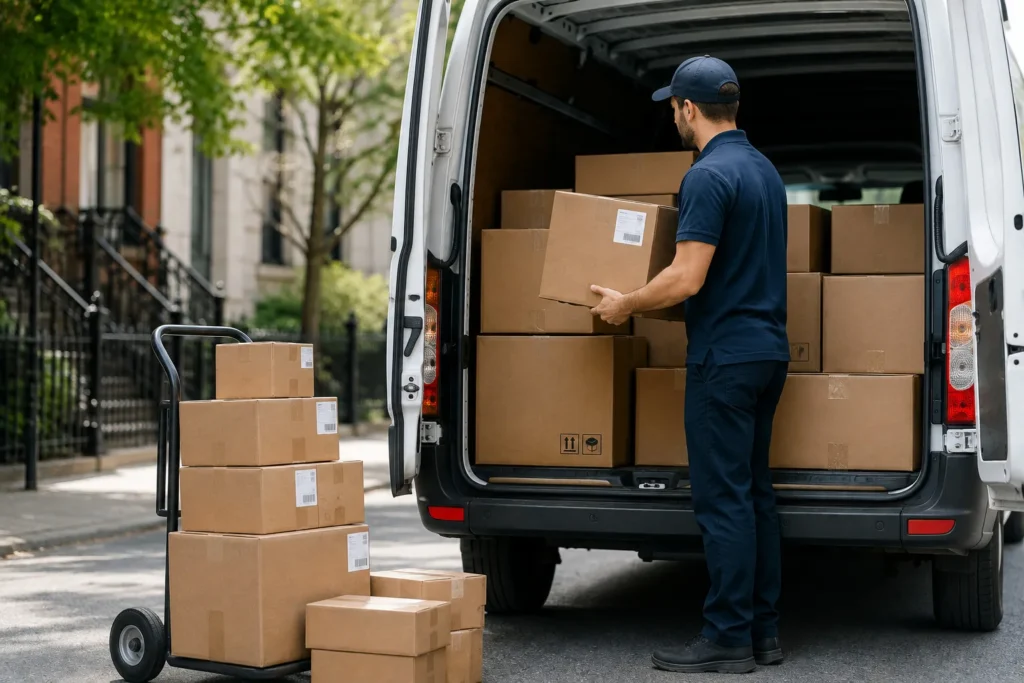
Same-day delivery is not the same as same-day fulfillment
Many brands mix up two different ideas: same-day delivery and same-day fulfillment.
Same-day fulfillment means the order is picked, packed, labelled, and handed off to a carrier on the same day it is placed, usually before a cutoff time.
Same-day delivery means the customer receives the order on the same calendar day.
Both are valuable, but they require different capabilities. Same-day fulfillment is often achievable for a broader range of ecommerce brands. Same-day delivery usually depends on customer location, warehouse location, local carrier options, delivery windows, product availability, and order cutoff time. A brand can offer same-day fulfillment nationally while only offering same-day delivery in selected metro areas.
Being precise matters. Overpromising same-day delivery when the operation can only support same-day dispatch creates disappointed customers, refunds, negative reviews, and avoidable support tickets.
The Canadian geography problem
Canada is a difficult market for blanket delivery promises. A customer in downtown Montreal, a customer in rural Quebec, a customer in Toronto, and a customer in northern British Columbia may all be shopping from the same website, but their delivery reality is completely different.
Distance, population density, carrier coverage, weather, ferry routes, remote area surcharges, and local delivery availability can all affect speed. This is why Canadian ecommerce brands should avoid one national promise unless the operation can support it across the entire country.
A better strategy is to define delivery promises by service area. For example, a brand may offer same-day local delivery in selected metro zones, next-day delivery in nearby provinces, and standard shipping for remote or long-distance destinations. The customer promise should match the actual fulfillment lane.
Inventory visibility comes before faster delivery
Same-day delivery fails quickly when inventory data is wrong. If a product appears available online but the warehouse cannot find it, the order cannot ship on time. If inventory is physically present but already allocated to another order, the brand may oversell. If returned inventory is counted as available before inspection, a customer may buy stock that should not be sold.
SPExpress’s guide to inventory visibility for ecommerce fulfillment in Canada explains why real-time stock data matters. For fast delivery, visibility is not a nice-to-have. It is the foundation of the promise.
Before offering same-day or next-day delivery, brands should know:
- which inventory is physically in the warehouse;
- which inventory is available to sell;
- which inventory is allocated to open orders;
- which inventory is inbound but not yet received;
- which inventory is held, damaged, returned, or pending inspection;
- which SKUs are too slow, fragile, bulky, or customized for fast delivery promises.
Cutoff times are the real promise
The customer sees a delivery promise. The warehouse sees a cutoff time. If the cutoff time is unrealistic, the promise fails.
A practical cutoff policy should account for order import time, payment checks, fraud review, pick path, packing requirements, label creation, carrier pickup, and exception handling. A 2 p.m. cutoff may work for simple SKUs and local delivery, but it may not work for bundles, fragile items, heavy cartons, custom packaging, or orders that require marketplace-specific documentation.
Brands should clearly define:
- the cutoff time by delivery option;
- the timezone used for the cutoff;
- which SKUs qualify;
- which postal codes qualify;
- what happens on weekends and holidays;
- what happens if payment or fraud review delays the order;
- when the customer should receive tracking.
SPExpress’s article on delivery estimate accuracy is especially relevant here because a delivery promise should be measured, monitored, and improved rather than guessed.
Picking and packing speed must match the promise
Fast delivery is impossible without fast warehouse execution. A carrier cannot rescue an order that waits too long in the pick queue. If the warehouse is slow to pick, pack, verify, and label orders, same-day service becomes a customer service risk.
Warehouse layout, SKU organization, barcode scanning, batching, packing station design, quality checks, and labour planning all affect speed. For high-volume or high-SKU ecommerce businesses, the warehouse picking process becomes a competitive advantage. SPExpress has covered this in more detail in its guide to the warehouse picking process for faster order fulfillment.
The key is not only speed. Accuracy matters just as much. A wrong item delivered quickly is still a failed order. Faster fulfillment should not remove quality checks; it should make them more systematic.
Packaging affects both speed and cost
Packaging is often overlooked in same-day delivery planning. But if warehouse staff need to search for the right box, rebuild packaging, add special inserts, or rework damaged cartons, orders slow down.
Right-sized packaging also affects shipping cost. Dimensional weight, carton size, packaging material, fragility, and carrier handling rules can change the economics of faster delivery. A brand that offers same-day delivery on poorly packed oversized orders may create margin problems even if customers are happy.
Before promising faster delivery, brands should standardize packaging options for their top SKUs. SPExpress’s article on right-sized packaging for order fulfillment is a useful companion resource for controlling fulfillment cost and improving pack speed.
Which products should qualify for same-day delivery?
Not every product should qualify for fast delivery. Brands should segment products based on operational fit and profitability.
Good candidates often include:
- small and lightweight items;
- high-velocity SKUs stored near packing stations;
- products with stable inventory availability;
- items that do not require customization;
- products with standardized packaging;
- orders in dense local delivery zones.
Riskier candidates include bulky items, fragile goods, temperature-sensitive products, multi-item bundles, marketplace orders with strict rules, returns-based exchanges, and products that require manual review. These items may still ship quickly, but they should not be included in a broad same-day promise without testing.
How a 3PL supports faster delivery
A 3PL cannot make every order arrive instantly. But a strong 3PL can help a Canadian ecommerce brand build the operational conditions required for faster delivery.
A 3PL can support faster delivery by:
- receiving and storing inventory in a more organized warehouse environment;
- connecting Shopify, WooCommerce, Amazon, Walmart, Etsy, or other channels to the fulfillment workflow;
- maintaining accurate inventory visibility;
- creating repeatable pick-and-pack processes;
- supporting carrier handoff and shipping label workflows;
- helping define realistic cutoff times;
- tracking fulfillment performance and exceptions;
- scaling labour and process capacity during promotions.
SPExpress’s warehousing, shipping, and integrations pages are natural starting points for brands that want to connect faster delivery goals with real fulfillment operations.
Same-day delivery vs. profitable delivery
Speed should not be the only goal. A brand can lose money by offering fast shipping too broadly. Same-day delivery may require higher carrier rates, more labour, tighter cutoff management, premium packaging, and more customer service support. If the customer will not pay for the speed and the order margin cannot absorb it, the promise may hurt profitability.
Brands should test faster delivery with a controlled group of SKUs, postal codes, and order values. For example, same-day delivery may be offered only for local customers above a minimum order value, or only for VIP customers, or only for high-margin product categories. The goal is to use speed strategically, not emotionally.
KPIs to track before scaling faster delivery
Before expanding a fast delivery offer, brands should monitor the operational numbers behind it.
- Same-day fulfillment rate: the percentage of eligible orders shipped the same day.
- On-time delivery rate: the percentage of orders delivered within the promised window.
- Pick accuracy: the percentage of orders picked without error.
- Pack time: the average time from order release to packed status.
- Carrier handoff success: whether orders meet pickup or injection deadlines.
- Cost per shipment: the true shipping and handling cost by service level.
- Support contact rate: how often customers ask about delays or tracking.
- Return rate by delivery option: whether faster delivery affects returns or customer satisfaction.
SPExpress’s article on key logistics KPIs can help brands evaluate whether faster delivery is improving the customer experience or simply adding cost.
A practical checklist
Before promising same-day or next-day delivery, Canadian ecommerce brands should confirm the following:
- Inventory data is accurate and updated frequently.
- Eligible SKUs are clearly defined.
- Eligible postal codes or service areas are clearly defined.
- Cutoff times are realistic and tested.
- Warehouse picking paths can support faster processing.
- Packaging materials are standardized and ready.
- Carrier pickup or local delivery windows are confirmed.
- Customer service has templates for delays and exceptions.
- Performance metrics are tracked weekly.
- The offer can be paused if capacity, weather, carrier service, or inventory conditions change.
Final thoughts
Same-day delivery can help Canadian ecommerce brands compete, but it should be built on operational truth. A fast promise without inventory visibility, warehouse discipline, carrier planning, and realistic cutoff times will create more problems than it solves.
The most successful brands will not copy every fast delivery trend blindly. They will test where speed matters, define which orders qualify, protect margins, and use fulfillment partners to turn delivery promises into repeatable workflows.
Need help building a faster fulfillment operation? Contact SPExpress to discuss warehousing, integrations, shipping, inventory visibility, and 3PL support for Canadian ecommerce growth.