
Know About Monitoring and Managing Older Stock | SPExpress 3PL
Master inventory management for old stock and slow-moving items. Learn how Inventory Aging Reports drive profitability and discover how a strategic 3PL partnership can monitor older stock effectively and reduce holding costs.
What You Should Know About Monitoring and Managing Older Stock
For any business dealing with physical goods—from emerging e-commerce brands to established global retailers—inventory is the lifeblood of operations. However, there’s a silent threat that exists in every efficient stockroom: older inventory. Often referred to as aged stock, stale stock, or slow-moving goods, these items consume valuable space, tie up capital, and steadily erode profit margins. Ignoring this problem is not just poor accounting; it is a direct operational risk.
Effective inventory management is defined not by how well you handle fast-moving products, but by the strategic precision you apply to the items that refuse to move. The goal is simple yet challenging: maximize turnover while minimizing the expensive footprint of stagnant goods. In this comprehensive guide, we will outline the critical tools, reports, and strategies required to proactively monitor older stock, manage its flow, and transform potential losses into achievable revenue.
Understanding the age distribution of your inventory is the first step toward reclaiming operational efficiency and strengthening cash flow. Let us delve into the systems and processes necessary to keep your stock vibrant and moving.
What You Should Know About Monitoring and Managing Older Stock
Why Older Stock is a Silent Killer
In logistics, we often focus on the efficiency of moving goods in and out of a location. However, the items that sit motionless pose the greatest long-term financial risk. Older stock, particularly inventory that has exceeded its expected shelf life or selling window, incurs significant hidden costs that often go overlooked until year-end audits.
These costs fall into several categories:
Capital Opportunity Cost: Every dollar tied up in aged inventory is a dollar that cannot be invested in marketing, R&D, or purchasing best-selling, in-demand products. This is the opportunity cost of stagnation.
Physical Holding Costs: Also known as carrying costs, these include the cost of storage space (rent, utilities), insurance premiums based on inventory valuation, and property taxes. The longer an item sits, the more expensive it becomes to house.
Obsolescence Risk: For products influenced by trends (electronics, fashion) or those with expiration dates (consumables), older stock rapidly approaches obsolescence. Its value may decrease to zero, requiring a complete write-off.
Operational Inefficiency: Stale inventory clogs warehouse aisles, disrupts efficient picking paths, and complicates cycle counting. This friction slows down the entire operation, making it more difficult to monitor both older and fresh stock simultaneously.
To effectively manage inventory, businesses must shift from a reactive mode—addressing old stock only when the warehouse is full—to a proactive one, using data to identify and dispose of slow-moving items before they become liabilities.
Understanding Inventory Aging Reports
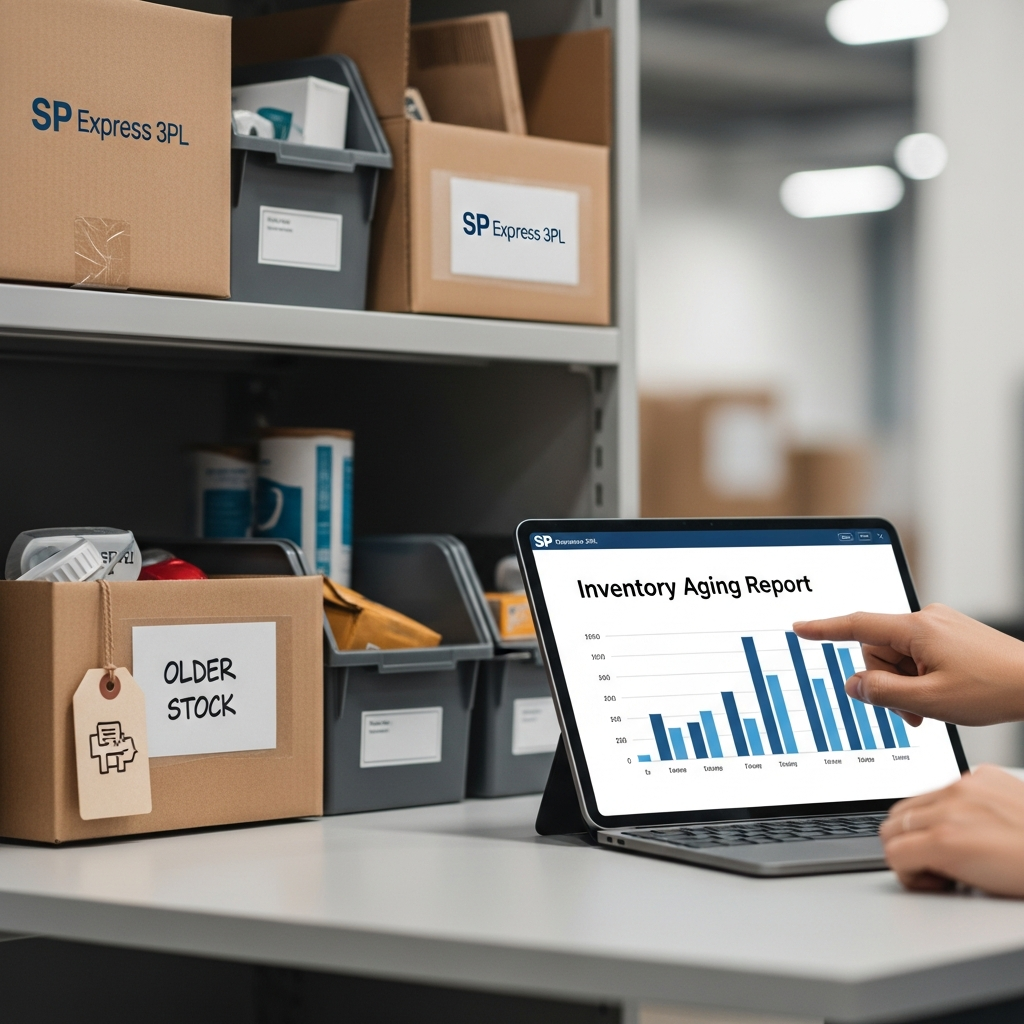
The single most crucial tool for tackling the issue of older stock is the Inventory Aging Report. This report moves beyond simple stock counts; it provides a detailed, time-based breakdown of all inventory currently held, categorized by the time elapsed since the product was received into the warehouse.
A standard Inventory Aging Report typically groups stock into time buckets, such as:
- 0–30 days (Fresh)
- 31–60 days (Normal)
- 61–90 days (Watch List)
- 91–180 days (Slow-Moving/Aged)
- 180+ days (High Risk/Dead Stock)
For each product SKU, the report lists the quantity, the purchase cost, the current retail value, and the total financial commitment tied up in that age bracket. This allows management to see, in hard numbers, the exact quantity of capital trapped in inventory older than, say, 90 days.
Key Metrics Derived from Aging Reports
Effective inventory management for old stock relies on analyzing these reports for trends and critical thresholds:
- Turnover Ratio: How quickly is a specific stock moving relative to the industry benchmark? A low turnover ratio immediately flags a product for intervention.
- Percentage of Aged Stock: What percentage of total inventory value resides in the 91+ day buckets? Best-in-class operations strive to keep this percentage extremely low.
- Write-Down Requirements: The report serves as a mandatory tool for accurate financial reporting, indicating which products must be written down to reflect their diminishing market value.
If you cannot generate accurate, real-time Inventory Aging Reports, you are operating blind. This reporting capability is non-negotiable for serious stock control.
The FIFO Principle: More Than Just a Catchphrase
The First-In, First-Out (FIFO) methodology is a fundamental concept in how to manage inventory, particularly when dealing with perishable, trend-sensitive, or serialized goods. While FIFO is primarily an accounting method for valuing inventory, it represents a core logistical strategy that prevents older stock from accumulating.
Logistical FIFO Implementation
True FIFO implementation requires meticulous planning and consistent execution within the warehouse:
- Storage Strategy: Storage must be configured to allow easy access to the oldest items. This often means using dedicated slots, gravity flow racks, or specific pallet positioning that forces the picking team to select the earliest receipt date first.
- Receipt Procedures: New incoming goods must be systematically placed behind existing stock, not in front of it. In many high-volume facilities, this is achieved through strict labeling and batch control processes.
- WMS Directives: A robust Warehouse Management System (WMS) is essential for reinforcing FIFO. The WMS should automatically calculate the ideal picking location based on the receipt date (or expiration date) and direct pickers to that specific slot, regardless of the physical proximity of newer stock.
Failure to adhere to FIFO leads directly to the creation of dead stock—the oldest goods are continually buried by newer shipments, making them invisible until they must be salvaged or written off.
Practical Strategies for Liquidating or Repurposing Older Inventory
Once the Inventory Aging Reports identify stock that is moving too slowly, immediate action is required. The primary goal is to recover as much capital as possible quickly, accepting that initial profit targets may no longer be realistic. A delayed decision is often more costly than a drastic markdown.
The best practice is to employ a multi-stage liquidation strategy:
- Bundling and Cross-Promotion (60–90 Day Mark): Integrate the slow-moving item with a popular, fast-moving product. Example: Offer the aged product as a deeply discounted add-on or a “free gift” when a customer buys a high-demand item. This boosts the average order value while clearing the old SKU.
- Targeted Discounts and Flash Sales (91–180 Day Mark): Initiate significant, high-visibility discounts (30–50% off). Use limited-time sales events (flash sales) to create urgency. Target previous purchasers of related products who are likely to value the item.
- Alternative Channels and Wholesale (180–365 Day Mark): If consumer channels fail, pivot to non-traditional sales outlets. This includes selling bulk lots to liquidators, auction sites, discount stores, or even international markets where the product might still be relevant. While the margin will be minimal, capital recovery is the priority.
- Donation or Destruction (365+ Day Mark): If the cost of storing the item now outweighs the potential recovery, the final options are donation (which offers tax write-offs) or destruction/recycling. For products like electronics or proprietary goods, destruction may be necessary to protect branding or intellectual property.
Successful inventory management for old stock relies on disciplined execution of these phases, ensuring that stock is pushed out before it drops into the next, more costly age bracket.
Technology and Automation
Manual tracking and spreadsheet-based inventory control are insufficient for monitoring the complexity of aged stock in modern supply chains. The volume and velocity of inventory require robust technological solutions.
A sophisticated Warehouse Management System (WMS) or Enterprise Resource Planning (ERP) system provides the necessary infrastructure to fight inventory aging:
Automated Reporting: These systems generate real-time Inventory Aging Reports on demand, eliminating the lag inherent in manual data collation.
Demand Forecasting Algorithms: Advanced systems use historical sales data, seasonal trends, and current market signals to predict future needs accurately. Better forecasting means tighter purchasing, which is the ultimate key to preventing overstocking and aging.
Safety Stock Alerts: The system can calculate optimal safety stock levels and alert buyers when proposed orders push inventory past pre-determined aging thresholds, forcing a re-evaluation of the purchase order.
Expiry Date Tracking: For items with specific expiration dates, the WMS tracks lot codes and shelf life, ensuring that FEFO (First-Expired, First-Out) is applied during the picking process, further helping to monitor older stock.
Investing in scalable, integrated inventory technology is not an expense—it is a mandatory investment in protecting your working capital.
How to Prevent Aging Stock from the Start
The best strategy for managing older stock is to prevent it from entering the aging categories in the first place. Prevention hinges on rigorous supply chain discipline and continuous data analysis.
Key Prevention Tactics
To reduce the likelihood of inventory aging, focus on these critical areas:
1. Improve Forecasting Precision:
Move beyond simple, averaged historical sales. Incorporate predictive analytics that account for planned promotions, competitor activity, and macro-economic factors. Tighter demand planning ensures purchase orders align precisely with anticipated consumption, reducing excessive buffer stock.
2. Cultivate Supplier Relationships:
Work with suppliers to reduce minimum order quantities (MOQs) or negotiate flexible return clauses for slow-moving items. The ability to place smaller, more frequent orders (just-in-time) reduces the risk of large batches becoming obsolete before they sell through.
3. Dynamic Replenishment Models:
Utilize automatic reorder points based on real-time velocity. Instead of ordering fixed quantities at fixed times, use a dynamic model that triggers replenishment only when stock hits a critical threshold, effectively lowering the amount of time inventory spends in your warehouse.
4. Consistent Inventory Auditing:
Implement continuous cycle counting programs rather than relying solely on annual physical counts. Consistent auditing improves inventory accuracy (IA), which is the foundation of reliable Inventory Aging Reports. If the reported stock level is incorrect, all management decisions based on that data will be flawed.
By focusing on upstream processes, businesses can dramatically improve their inventory flow and minimize the need for painful liquidation tactics down the line.
The Strategic Advantage of Partnering with a 3PL
For growing businesses, maintaining sophisticated inventory systems, adhering to strict FIFO protocols, and executing complex liquidation strategies can overwhelm internal resources. This is where a strategic Third-Party Logistics (3PL) provider becomes an invaluable partner.
How a 3PL Optimizes Older Stock Management
A specialized 3PL like SPExpress provides immediate access to the necessary infrastructure and expertise required for rigorous stock control:
Advanced WMS Infrastructure: Leading 3PLs operate cutting-edge WMS technology that automatically captures and maintains the data required for precise Inventory Aging Reports. This reporting is often available to the client dashboard in real time.
Guaranteed FIFO/FEFO Execution: Professional 3PL operations are meticulously designed around minimizing stock rotation issues. Their standard operating procedures ensure that the oldest stock is always prioritized for picking, preventing accidental aging.
Space Optimization and Reduced Holding Costs: By leveraging the shared infrastructure of a 3PL warehouse, businesses only pay for the space they actually use, dynamically adjusting to demand fluctuations. When inventory ages, the variable costs associated with that aging stock are optimized.
Strategic Fulfillment Support: When liquidation is necessary, a 3PL can efficiently manage complex fulfillment needs, such as bundling promotions, processing returns from wholesale channels, and managing the logistics of large, high-volume flash sales without disrupting the flow of core operations.
Outsourcing fulfillment and sophisticated inventory oversight allows businesses to focus capital and attention on marketing, product development, and sales, trusting that expert partners are efficiently managing and helping to monitor older stock.
To learn more about how SPExpress can optimize your inventory storage, streamline fulfillment, and provide the actionable data necessary to control aged stock, visit our SPExpress Services Page.
Older stock is an inevitable reality in the world of commerce, but it should never be an unmanaged burden. By integrating precise data tools, starting with the Inventory Aging Report, and applying proactive strategies like strict FIFO adherence and phased liquidation, businesses can drastically reduce the negative financial impact of slow-moving goods.
The mastery of inventory management for old stock transforms potential losses into recovered capital and ensures that your working resources are constantly reinvested into the products that drive growth. Whether managed internally or optimized through a partnership with a reliable 3PL, treating older inventory as a high-priority financial metric is the hallmark of a resilient, profitable, and efficient operation.
Read more:
Shift From In-House to Outsourced Fulfillment – When it’s Better & How to Do it Right
How Third-Party Logistics Services Can Ensure E-Commerce Growth?
The Top 6 Reasons for Outsourcing in Supply Chain Management for Your eCommerce Business
SPExpress is a trusted fulfillment partner that delivers seamless multichannel order fulfillment services to leading brands. Contact our team today to learn how we can help you optimize your hybrid fulfillment strategy.
SPExpress is committed to supporting your order fulfillment needs, regardless of the size of your online store. Our expertise and resources can help you optimize your order fulfillment strategy and achieve your business goals.
At SPExpress, we offer efficiency, scalability, and comprehensive shipping and warehousing solutions to businesses of any size, easing the burden on businesses. Get in touch with us right now to find out how our fulfillment and warehousing services may help your company. Don’t let inventory problems ruin your company; work with us to find dependable, effective solutions that give you more control. We are ready to take your order fulfillment game to new levels.
Contact us today to learn how we can assist you with your inventory management and order fulfillment strategies. Together with our experts, you can start on the path to reliable and efficient inventory management right now.