
Mastering Delivery Estimate Accuracy (DEA): How to Monitor and Improve Logistics Performance
Delivery Estimate Accuracy (DEA) is the cornerstone of trust in the world of e-commerce logistics. Learn expert strategies for monitoring, measuring, and radically improving your delivery estimates and overall Order Fulfillment with SPExpress.
What is Delivery Estimate Accuracy and How to Monitor and Improve It
In the hyper-competitive world of e-commerce and modern logistics, the transaction does not end when the customer clicks “Buy.” It ends when the product is delivered—and often, the quality of that experience is defined entirely by one metric: Delivery Estimate Accuracy (DEA). For logistics providers and retailers, mastering DEA is not just a competitive edge; it is a fundamental requirement for survival.
A precise delivery estimate bridges the gap between customer expectation and logistical reality. When estimates fail, customer trust erodes rapidly, leading to increased customer service costs, higher return rates, and a measurable drop in lifetime customer value. Conversely, companies that consistently nail their delivery windows foster loyalty, reduce inquiries, and build a reputation for reliability.
This comprehensive guide dives deep into the definition, measurement, and advanced techniques required to achieve higher delivery estimate accuracy, positioning your operation for superior Order Fulfillment performance.
What is Delivery Estimate Accuracy and How to Monitor and Improve It
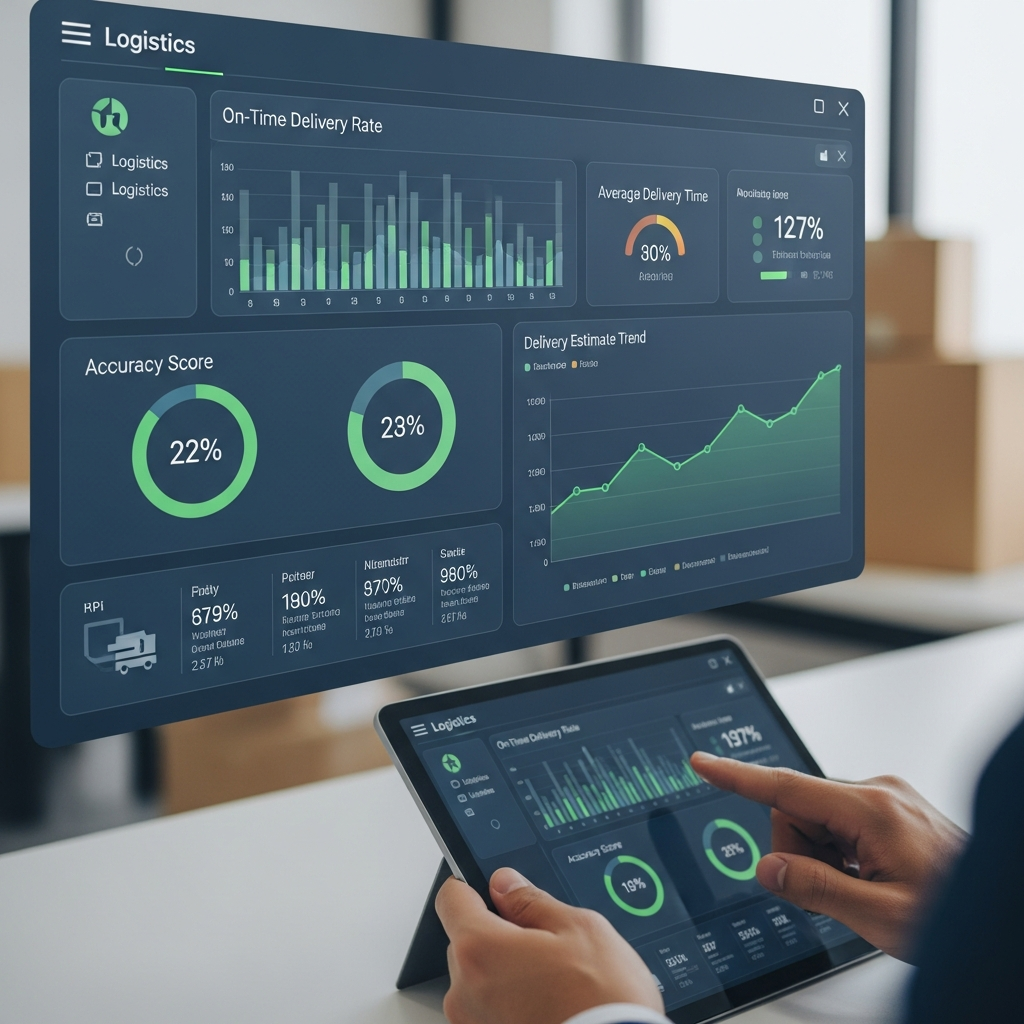
What is Delivery Estimate Accuracy (DEA)
Delivery Estimate Accuracy (DEA), sometimes referred to as Estimated Time of Arrival (ETA) accuracy, is a critical logistics performance indicator (KPI) that measures the degree of conformity between the delivery window promised to the customer at the time of order (or dispatch) and the actual time of delivery.
It is distinct from simple speed. A delivery that takes 10 days but was accurately forecasted as 9-11 days is highly accurate. A delivery that takes 3 days but was promised in 1-2 days is fast but highly inaccurate. DEA is a measure of trust and predictability.
The Two Pillars of DEA
Predictive Accuracy: How close the initial estimated delivery date (EDD) is to the actual delivery date (ADD).
Consistency: The ability to maintain that level of accuracy across all orders, regardless of destination, carrier, or seasonal volume fluctuation.
Achieving high delivery estimate accuracy requires real-time data flow across the entire supply chain, from inventory management and warehousing to the final mile carrier handoff. Inaccurate estimates usually stem from poor data synchronization, inadequate buffer management, or a lack of visibility into third-party carrier performance.
The Direct Impact of Precise Delivery Estimates
For any organization relying on logistics—from fulfillment centers to retailers—improving delivery estimates yields tangible benefits that directly affect the bottom line.
Customer Satisfaction and Loyalty
Expectation management is key to modern satisfaction. Studies consistently show that customers prioritize reliable estimates over marginal speed increases. When a delivery is late without warning, 70% of consumers report a negative brand perception. Conversely, when delivery estimates are met or exceeded, customer loyalty increases significantly, leading to higher repurchase rates and better reviews. This metric is a direct indicator of successful Order Fulfillment.
Reduction in Customer Service Load
The “Where Is My Order?” (WISMO) inquiry is one of the most resource-intensive activities for customer support teams. Inaccurate delivery estimates exponentially increase WISMO calls and chats. By improving DEA, companies reduce the need for customers to contact support, thereby lowering operational overhead and freeing agents to handle complex issues.
Improved Inventory and Operational Planning
High DEA signals high visibility within your logistics network. When you know precisely how long each leg of the journey takes, you can optimize inventory positioning, buffer stock levels, and cross-docking schedules. This internal efficiency loop enhances overall delivery accuracy for future shipments.
Competitive Differentiation
In a saturated market, reliability serves as a powerful differentiator. Companies known for their rock-solid delivery predictions are often chosen over competitors, even if their pricing is slightly higher. Trust translates directly into market share.
Key Variables that Undermine Delivery Accuracy
The complexity of logistics means that estimates can be derailed by hundreds of variables. Logistics providers understand these pitfalls and integrate them into their predictive models.
- First-Mile Efficiency: Delays in picking, packing, or preparing the shipment for carrier collection (Order Fulfillment speed). If the carrier collects the package a day later than planned, the entire estimate is compromised.
- Transit Variables: This includes factors beyond immediate control, such as severe weather events, traffic congestion, road closures, and international port delays or customs clearance issues.
- Carrier Performance Fluctuations: Relying on published carrier service level agreements (SLAs) without auditing actual performance is dangerous. Carrier performance varies by lane, season, and volume.
- Data Latency and System Gaps: If the tracking system updates slowly, or if the handoff between fulfillment software and carrier software is not seamless, the real-time location of the package is lost, making accurate prediction impossible.
- Last-Mile Issues: Issues like incorrect addresses, failed delivery attempts, or final sorting facility bottlenecks are often the highest source of estimate failures.
How to Measure DEA
To improve delivery estimate accuracy, you must first define how you measure it. Simple metrics like “On-Time Delivery Rate” (OTD) are necessary but insufficient for a truly accurate monitoring system.
On-Time Delivery Rate (OTD)
The most basic metric. Measures the percentage of deliveries that arrive within the promised delivery window (e.g., May 15th – May 17th).
Formula: (Number of deliveries within the window / Total deliveries) * 100.
Mean Absolute Error (MAE)
MAE provides a precise quantification of the average magnitude of error, telling you, on average, how many days or hours off your estimate was. For example, if your average error is 1.5 days, that provides highly actionable data.
Formula: Sum of |Actual Delivery Date – Estimated Delivery Date| / Total Deliveries.
Target Window Compliance (TWC)
TWC is critical for businesses promising specific time slots (e.g., 9 AM to 12 PM). This metric measures the percentage of deliveries that comply with the specified time slot, essential for complex urban or specialized logistics.
Forecast Hit Rate (FHR) by Channel/Carrier
Analyzing the DEA segmented by the carrier, fulfillment center, and destination geography reveals hidden bottlenecks. If Carrier A has a 95% OTD rate on the West Coast but only 70% in the Midwest, your estimates must be adjusted accordingly for that specific lane.
Monitoring these metrics requires robust Business Intelligence (BI) tools integrated across your warehouse management system (WMS) and carrier tracking platforms. Without a single, unified data view, improving delivery accuracy becomes a guessing game.
Advanced Operational Strategies for Improving Delivery Estimate Accuracy
Improving DEA moves beyond simply hoping carriers perform better; it involves systemic changes rooted in data and process optimization.
Dynamic Buffer Calculation
Static buffers (e.g., always adding one extra day) lead to inaccurate, overly cautious estimates. World-class logistics providers use dynamic buffers based on real-time factors:
- Historical performance of the chosen carrier on that specific delivery lane.
- Current seasonal peak (e.g., holiday volume).
- Real-time weather alerts impacting transit routes.
- The specific time of day the order was placed (e.g., orders placed after the daily carrier cutoff get an automatic day added).
Enhance Order Fulfillment Speed
The earlier an order is processed and handed off, the more stable the delivery window becomes. Investing in high-speed, automated warehouse operations minimizes first-mile variability. If your goal is to achieve world-class Order Fulfillment and guaranteed Delivery Accuracy, optimizing pick-pack-ship processes is mandatory.
Carrier Performance Auditing and Optimization
Don’t fully rely on carrier SLAs—trust your data. Regularly audit carrier performance using MAE and FHR metrics. If a carrier consistently underperforms in specific regions, either negotiate for better service or route traffic to a more reliable backup carrier for those lanes. SPExpress specializes in multi-carrier optimization to ensure the best possible delivery estimates are achieved regardless of final destination.
Utilize Predictive Modeling in Transit
Initial EDDs are crucial, but the system must constantly recalibrate. As a package moves through customs or is delayed at a hub, the predictive model should automatically generate an updated, realistic ETA and communicate it proactively to the customer. This proactive communication, even if bad news, preserves customer trust far better than silence.
Leveraging Technology: AI and Predictive Analytics
The future of delivery estimate accuracy lies in advanced technological solutions that move beyond simple historical averages.
The Power of Machine Learning (ML)
ML algorithms can analyze millions of data points simultaneously, including:
- Historical transit times (down to the hour).
- Seasonal volume spikes and their impact on hub processing times.
- Geospatial data (traffic flow, topographical challenges).
- Carrier capacity utilization rates.
By training models on these complex variables, systems can generate highly granular and reliable delivery estimates that adapt instantly to changing real-world conditions. This enables the calculation of an estimated delivery *time* (e.g., Tuesday between 2 PM and 4 PM) rather than just a date range.
End-to-End Visibility Platforms
A unified logistics platform that connects the WMS, Transportation Management System (TMS), and carrier networks is essential. Full supply chain visibility allows logistics managers to see deviations immediately—not when the package is already late—enabling intervention or proactive customer communication.
These platforms should provide the necessary tools to monitor OTD, MAE, and TWC in real-time dashboards, turning massive amounts of raw tracking data into actionable intelligence for improving delivery accuracy.
Partnering for Excellence in Delivery Accuracy
Achieving and maintaining high Delivery Estimate Accuracy is a continuous, data-intensive effort that requires significant technological investment and specialized expertise. For many businesses, particularly those scaling rapidly or managing complex logistics, partnering with a proven expert like SPExpress is the most efficient path to excellence.
SPExpress provides the necessary infrastructure, advanced data modeling capabilities, and multi-carrier integration required to ensure your delivery estimates are reliable, transparent, and accurate. By leveraging our deep understanding of global logistics and utilizing advanced tracking technology, we help clients minimize service failures, maximize customer satisfaction, and ensure every element of the Order Fulfillment process is optimized for predictability.
In conclusion, precise delivery estimates are the handshake between your brand and your customer. Make sure that the handshake is firm, confident, and absolutely reliable. Focus on DEA, and watch your customer loyalty and operational efficiency soar.
Ready to transform your logistics operations and guarantee exceptional delivery accuracy? Contact SPExpress today to discuss our tailored fulfillment and shipping solutions.
Read more:
Shift From In-House to Outsourced Fulfillment – When it’s Better & How to Do it Right
How Third-Party Logistics Services Can Ensure E-Commerce Growth?
The Top 6 Reasons for Outsourcing in Supply Chain Management for Your eCommerce Business
SPExpress is a trusted fulfillment partner that delivers seamless multichannel order fulfillment services to leading brands. Contact our team today to learn how we can help you optimize your hybrid fulfillment strategy.
SPExpress is committed to supporting your order fulfillment needs, regardless of the size of your online store. Our expertise and resources can help you optimize your order fulfillment strategy and achieve your business goals.
At SPExpress, we offer efficiency, scalability, and comprehensive shipping and warehousing solutions to businesses of any size, easing the burden on businesses. Get in touch with us right now to find out how our fulfillment and warehousing services may help your company. Don’t let inventory problems ruin your company; work with us to find dependable, effective solutions that give you more control. We are ready to take your order fulfillment game to new levels.
Contact us today to learn how we can assist you with your inventory management and order fulfillment strategies. Together with our experts, you can start on the path to reliable and efficient inventory management right now.