
Warehouse Automation Best Practices | SPExpress
Discover warehouse automation best practices to help Canadian small businesses and e-commerce brands boost fulfillment speed, cut errors, and scale smarter with SPExpress.
Why Warehouse Automation is the Competitive Edge Canadian Businesses Can’t Afford to Ignore
The pressure on Canadian small businesses and e-commerce brands to fulfill orders faster, more accurately, and at lower cost has never been greater. Customers who shop online today expect their packages to arrive quickly, reliably, and without errors — and if your warehouse operations can’t keep up, they’ll simply take their business elsewhere.
For small and mid-sized businesses across Canada, this reality has made warehouse automation best practices not just a nice-to-have, but a genuine survival strategy. Whether you’re running a Shopify store out of Toronto, managing a growing wholesale operation in Calgary, or scaling a DTC brand in Vancouver, the way you approach warehouse efficiency and automation technology will define your growth trajectory for years to come.
But here’s where many small business owners get stuck: they hear the word “automation” and immediately picture million-dollar robotic systems that belong in Amazon megawarehouses, not their 5,000-square-foot fulfillment floor. The truth is far more encouraging. Modern warehouse automation for small businesses has evolved dramatically. Today’s tools are modular, affordable, and designed with scalability in mind, meaning a business processing 200 orders a day can adopt the same foundational best practices as one processing 20,000 orders a day, just at a different scale and investment level. The principles remain the same; the application adapts to your size and budget.
What makes automation particularly compelling for Canadian e-commerce brands right now is the unique set of market pressures they face. Rising labour costs across provinces, a competitive cross-border shipping landscape, seasonal demand surges driven by Canadian retail holidays and weather-related delays, and the ongoing challenge of meeting bilingual and regional compliance requirements all create a complex operational environment. Layering automation intelligently onto your existing workflows isn’t just about cutting costs — it’s about building a resilient, scalable fulfillment infrastructure that lets you compete with larger players and serve your customers consistently.
Why Warehouse Automation is the Competitive Edge Canadian Businesses Can’t Afford to Ignore
At SPExpress, we’ve worked alongside countless Canadian small businesses navigating this exact journey. From brands just beginning to explore their first warehouse management system to established operators looking to fine-tune their automated order-fulfillment processes, the questions we hear most often center on the same core challenge: how do you actually implement automation the right way? How do you avoid costly mistakes, choose the right technology, and bring your team along for the ride without grinding operations to a halt during the transition?
That’s precisely what this guide is designed to answer. Drawn from industry best practices, real-world fulfillment experience, and the specific needs of Canadian e-commerce businesses, these ten strategies will give you a practical, actionable roadmap for optimizing your warehouse automation system — whether you’re starting from scratch or refining what you already have. You don’t need to implement everything at once. In fact, the best implementations are phased, deliberate, and grounded in clear business objectives from day one.
In this article, you’ll learn how to set measurable goals before spending a dollar on technology, how to evaluate scalable warehouse solutions that won’t trap you in a corner two years from now, and how to build the kind of data-driven culture that keeps your operations improving continuously. You’ll also discover why sustainable practices and predictive maintenance are no longer optional extras for forward-thinking fulfillment operations, and how partnering with the right 3PL partner can amplify the benefits of every automation investment you make.
Let’s walk through the best practices that separate warehouse operations that struggle under pressure from those that perform precisely when it matters most.
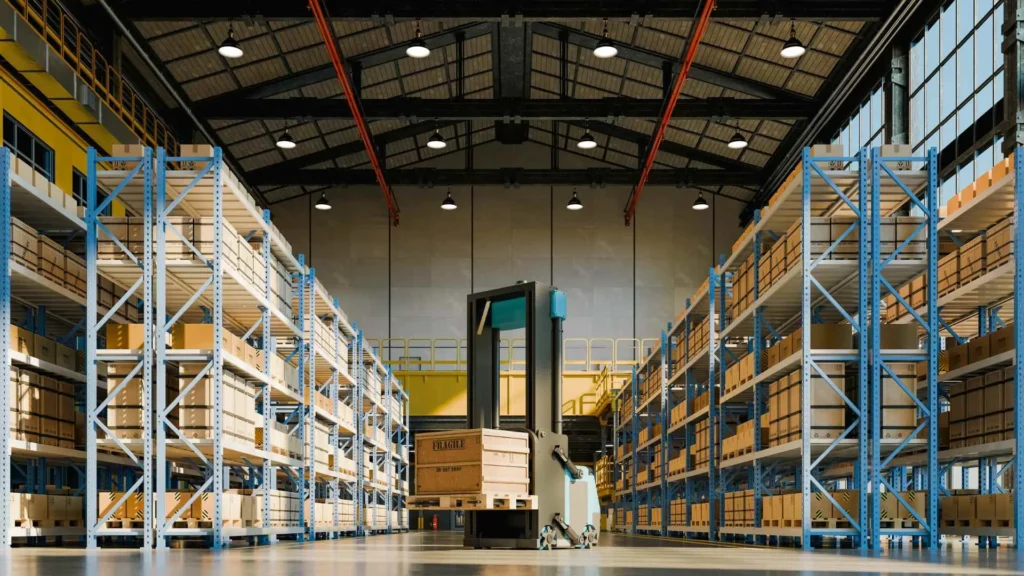
Warehouse Automation: What It Means for Canadian Small Businesses and E-Commerce Fulfillment
Before diving into specific best practices, it’s worth establishing a clear, grounded understanding of what warehouse automation actually means in the context of a Canadian small business or growing e-commerce brand. The term is used loosely — sometimes to describe a fully robotic picking system, other times to refer to a simple barcode-scanning process.
For this guide, warehouse automation refers to any technology, software, or system that reduces manual effort, minimizes human error, and accelerates the movement of goods through your fulfillment operation. That definition is intentionally broad because the spectrum of available solutions is wide, and your position on it should reflect your current operation, your growth goals, and your available capital.
At its most accessible end, inventory management automation might mean implementing a warehouse management system (WMS) that tracks stock levels in real time and automatically triggers reorder points. Moving further along the spectrum, you might incorporate conveyor systems, automated label printing, barcode or RFID scanning at receiving and dispatch, or pick-to-light systems that guide warehouse staff to the correct bin locations with visual cues.
At the more advanced end, robotics like autonomous mobile robots (AMRs) and automated storage and retrieval systems (AS/RS) take on the physical movement of inventory entirely. The key insight for small businesses is that you don’t need to — and shouldn’t try to — jump to the advanced end immediately. The best warehouse automation for small business implementations is incremental and intentional.
For Canadian e-commerce brands specifically, the automation conversation often begins with e-commerce fulfillment challenges that are unique to this market. Shipping across vast geographic distances, managing French and English labelling requirements for national brands, navigating carrier rate structures from Canada Post, Purolator, and regional couriers, and dealing with the seasonal volatility of Canadian shopping patterns (think Boxing Day rushes, back-to-school peaks, and weather-disrupted January shipping windows) — all of these factors put enormous stress on manual fulfillment processes. Automation provides a way to absorb that stress without proportionally scaling your headcount.
One of the most important things to understand about optimizing your warehouse system is that automation is not a one-time project. It’s an ongoing program of improvement. Businesses that treat their first automation investment as “done” tend to under-realize its potential and encounter frustration when new bottlenecks emerge downstream of the original fix.
Integration is another foundational concept worth unpacking here. A warehouse management system that doesn’t talk to your e-commerce platform, your ERP, or your carrier management tools is an island. It may solve one problem while creating friction everywhere else. Modern scalable warehouse solutions are built with integration in mind — they offer APIs, native connectors to platforms like Shopify, WooCommerce, and NetSuite, and flexible data exchange frameworks that allow your tech stack to function as a unified whole rather than a collection of disconnected tools. When evaluating any automation technology, the first question to ask is not “what does this tool do in isolation?” but “how does this tool make the rest of my operation smarter?”
It’s also worth acknowledging the human side of warehouse automation — something that often gets underweighted in vendor presentations and technology assessments. For many small business teams, the introduction of new automated systems represents a significant change to daily routines, job roles, and even job security concerns.
Managing this transition thoughtfully is not a soft consideration; it’s a hard operational requirement. Teams that aren’t properly trained or that don’t understand why changes are being made will find workarounds, make errors, and ultimately slow down the very efficiency gains automation is designed to produce.
Finally, for Canadian small businesses considering whether to build their own automated fulfillment infrastructure or leverage an existing 3PL in Canada, it’s worth understanding the total cost picture clearly. Building in-house requires capital expenditure on technology, facility upgrades, staff training, and ongoing maintenance.
Partnering with a 3PL service that has already made those investments can provide immediate access to sophisticated automated order fulfillment capabilities at a fraction of the cost and with the flexibility to scale up or down as your business demands. Understanding this landscape is essential context for the best practices that follow.
Best Practices: Setting Goals, Choosing Scalable Technology, and Piloting Before You Scale
Best Practice 1: Set Clear, Measurable Objectives Before Implementing Any Warehouse Automation System
The single most common reason warehouse automation projects underdeliver is that they begin with technology selection rather than objective setting. A business owner sees a compelling demonstration of an automated picking system, gets excited about the efficiency gains, and signs a contract before ever articulating what specific problem they’re actually trying to solve. Weeks or months later, they discover the system addresses a bottleneck that wasn’t their primary constraint, while the real issue — say, inaccurate inventory counts at receiving remains completely untouched. This isn’t a technology failure; it’s a planning failure. And it’s entirely avoidable.
The discipline of defining clear, measurable objectives before committing to any warehouse automation system is the foundation on which every other best practice in this guide rests. At SPExpress, we recommend that businesses begin their automation planning with a structured operational audit.
Map your current fulfillment workflow from the moment inventory arrives at your dock to the moment a parcel leaves for the carrier. At each stage, identify your current performance metrics: receiving accuracy rate, putaway time per unit, pick error rate, pack time per order, shipping cut-off compliance, and return processing time. These numbers tell you where your operation is actually losing money and time, and they give you a baseline against which to measure the impact of any automation investment.
Once you have your baseline data, set specific, time-bound improvement targets. For example: reduce pick error rate from 2.1% to below 0.5% within six months of implementation, or cut average order processing time from 4.2 hours to under 90 minutes by Q3. These aren’t arbitrary numbers — they should be tied directly to measurable business outcomes, such as a reduction in returns processing costs, an improvement in customer satisfaction scores, or an increase in the number of orders you can process per shift without adding headcount. This is what warehouse automation best practices look like when applied with genuine strategic intent.
Clear objectives also protect you during vendor evaluation. When a technology provider promises that their system will “transform your warehouse operations,” you can respond with specificity: “Our primary objective is to improve inventory accuracy at receiving from 94% to 99.5%. How does your solution address that specific workflow, and what results have you achieved for comparable clients?” This kind of targeted questioning cuts through marketing language and forces vendors to demonstrate real relevance to your actual challenges. It also helps you avoid over-purchasing features you don’t need, which is a budget trap that catches many small businesses early in their automation journey.
Best Practice 2: Choose Scalable Automation Technology That Integrates With Your Existing Platforms
For Canadian small businesses and growing e-commerce brands, technology selection is one of the highest-stakes decisions in the automation process. Choose well, and you have a foundation that supports your growth for years. Choose poorly, and you end up with an expensive system that boxes you into a corner, resists integration with the rest of your tech stack, and requires a costly overhaul the moment your business needs change. The guiding principle here is deceptively simple: choose scalable warehouse solutions that meet you where you are today and can grow with you to where you’re going.
Scalability in this context has two dimensions. The first is operational scalability — the system’s ability to handle significantly higher order volumes, SKU counts, and warehouse locations without requiring a complete platform change. The second is technical scalability — the system’s ability to integrate with the other tools in your tech ecosystem, including your e-commerce platform (Shopify, WooCommerce, Magento), your ERP or accounting software (QuickBooks, SAP, NetSuite), and your carrier management tools. A warehouse management system that excels at the first dimension but fails at the second will create data silos that cost you far more in manual reconciliation than you save in operational efficiency.
When evaluating any inventory management automation platform or broader automation solution, ask vendors directly about their integration architecture. Do they offer native connectors to your existing platforms, or does integration require expensive custom development? How do they handle data synchronization — is inventory updated in real time across all connected systems, or are there lag periods that could cause overselling or stockout errors? What happens to your data if you decide to switch platforms in three years? These are not hypothetical concerns; they are practical questions that have derailed real automation implementations for Canadian small businesses that didn’t ask them early enough.
Best Practice 3: Start With a Pilot Program to Test Automation in Real Conditions Before Full Deployment
Even the most thoroughly planned warehouse automation implementation will encounter surprises when it meets the reality of your specific operation. The physical layout of your facility, the behaviour patterns of your team, the quirks of your SKU mix, and the unpredictability of your order flow will all interact with new technology in ways that no vendor demo or case study can fully predict. This is why piloting — testing automation in a controlled, real-world environment before committing to full deployment — is one of the most important warehouse efficiency tips any small business can follow.
A well-designed pilot program doesn’t mean being timid about automation. It means being smart about risk management. Select a specific zone of your warehouse, a specific product category, or a specific part of your fulfillment workflow as your pilot scope. Implement the automation in that defined area, measure its performance rigorously against your pre-established objectives, identify the gaps and friction points that emerge, and refine your processes before expanding. This approach dramatically reduces the risk of a system-wide disruption, gives your team time to build confidence with new tools, and provides valuable data that makes each subsequent phase of the rollout more successful than the last.
For automated order fulfillment specifically, a common pilot approach is to select a high-volume but operationally straightforward subset of orders — perhaps standard-size, single-item orders to domestic addresses — and route those through the new automated workflow while continuing to process all other orders manually. This lets you validate the system’s accuracy, speed, and reliability without exposing your entire order flow to potential disruption during the learning phase. As the pilot demonstrates consistent performance, you expand its scope methodically, incorporating more complex order types and higher volumes as confidence grows.
Practical Tips and Real-World Use Cases for Warehouse Automation Success
Understanding the theory behind warehouse automation best practices is one thing — putting them into action is another. For Canadian small businesses and e-commerce brands navigating the realities of tighter margins, seasonal demand swings, and rising customer expectations, the gap between knowing and doing can feel wide.
The good news is that warehouse automation for small businesses doesn’t require a complete operational overhaul. With a focused, step-by-step approach, even modest-sized fulfillment operations can achieve measurable gains in speed, accuracy, and cost efficiency. Here, we break down the most actionable tips and illustrative use cases to help you move from concept to execution.
Start with a Workflow Audit Before Touching Any Technology
Before investing a single dollar in automation tools, conduct a thorough audit of your existing warehouse workflows. Map every step of your receiving, putaway, picking, packing, and shipping processes. Identify where delays occur, where errors are most frequent, and where labour hours are disproportionately concentrated.
This exercise often reveals that a handful of bottlenecks account for the majority of inefficiencies. For instance, many Canadian e-commerce businesses find that manual pick-and-pack processes during peak seasons — think holiday rushes or major sales events like Black Friday — account for a dramatic spike in order errors and labour costs. Addressing these specific pain points first, rather than automating broadly, delivers the fastest return on investment.
At SPExpress, working with clients across Canada has reinforced this lesson repeatedly: the businesses that see the best results from automation are those that begin with clarity about where their current system is failing them. A workflow audit turns vague frustration into a prioritized action list, giving your automation rollout a purpose-driven foundation.
Use Barcode Scanning and RFID as Your Entry Point
For businesses that are new to inventory management automation, barcode scanning and RFID technology represent one of the most accessible and cost-effective entry points. These tools dramatically reduce manual data entry errors, improve real-time inventory visibility, and integrate seamlessly with most modern warehouse management system platforms.
A small Ontario-based apparel retailer, for example, might use barcode scanning at receiving and RFID tags on high-value items to virtually eliminate discrepancies between physical stock counts and system records. The result is fewer stockouts, faster cycle counts, and a more reliable foundation for future automation layers.
The key is to ensure your scanning and RFID infrastructure communicates directly with your WMS and, ideally, your e-commerce platform. When a customer in Vancouver places an order, your system should immediately reflect accurate stock levels — not what was counted three days ago. This kind of real-time data flow is the backbone of effective automated order fulfillment.
Implement Zone-Based Picking to Accelerate Order Throughput
Zone-based picking is a practical strategy that divides your warehouse into distinct areas, each assigned to specific pickers. Rather than having a single picker walk the entire warehouse floor to compile one order, multiple pickers work simultaneously within their zones, then pass items to a consolidation point. For growing e-commerce businesses with diverse SKU counts, this approach can reduce pick times by 30 to 50 percent without requiring major capital investment in robotics or conveyor systems.
Pair zone-based picking with a slotting optimization strategy — placing your fastest-moving SKUs closest to the packing station — and the efficiency gains compound. SPExpress recommends re-evaluating your slotting strategy at least quarterly, particularly if your product mix shifts seasonally. A summer outdoor goods retailer, for example, should have completely different slotting priorities in July than in January.
Leverage Your WMS Data to Drive Continuous Improvement
One of the most underutilized assets in any automated warehouse is the data the system already collects. Your warehouse management system likely generates detailed reports on pick rates, error frequencies, dock-to-stock times, and carrier performance. Use these reports to establish baseline KPIs, then set incremental improvement targets. If your average pick accuracy is currently 97 percent, aim for 98.5 percent over the next quarter and identify the process changes that will get you there. This data-driven discipline is what separates businesses that adopt automation from those that truly optimize warehouse systems over the long term.
Canadian businesses working with a 3PL partner like SPExpress gain an added advantage here: access to aggregated fulfillment data and benchmarking insights that help contextualize your performance against industry standards. Rather than measuring yourself in isolation, you can see how your operation compares and where the highest-value improvements lie.
Pilot Automation in One Area Before Scaling
If your business is considering a more significant automation investment — such as an automated conveyor system, a goods-to-person picking solution, or an autonomous mobile robot fleet — resist the temptation to deploy across the entire facility at once.
A pilot program confined to one zone or one workflow allows you to test performance in real conditions, identify integration issues before they affect the whole operation, and build internal confidence in the technology. This phased approach is especially valuable for Canadian small businesses operating on lean budgets, where a failed full-scale deployment could have serious financial consequences. Running a controlled pilot for 60 to 90 days gives your team time to adapt, your technology stack time to stabilize, and your leadership team time to validate the business case before committing to broader rollout.
Building a Smarter Fulfillment Future with SPExpress
The path to a well-optimized warehouse isn’t a single leap — it’s a series of deliberate, well-informed steps taken in the right sequence. Throughout this article, we’ve explored the core warehouse automation best practices that Canadian small businesses and e-commerce brands can use to meaningfully improve how their operations run, from setting clear objectives and choosing the right technology to training staff effectively and embracing data-driven, sustainable practices. Each of these strategies builds on the others, creating a compounding effect that transforms not just individual workflows but your entire fulfillment capability.
For businesses operating in Canada’s competitive e-commerce landscape, the stakes have never been higher. Customers expect two-day or even same-day delivery windows. Return processes need to be frictionless. Inventory needs to be accurate to the unit. These aren’t aspirational benchmarks anymore; they’re baseline expectations, and meeting them with manual processes alone is becoming increasingly untenable. That’s precisely why investing in the right systems, partners, and practices today is one of the most important business decisions a growing Canadian brand can make.
Why E-Commerce Fulfillment in Canada Demands a Smarter Approach
Canada presents a unique set of fulfillment challenges that make thoughtful automation even more critical. The country’s vast geography means that carrier selection, zone-based shipping costs, and regional distribution strategy all have an outsized impact on profitability. Seasonal demand patterns — from holiday peaks to summer outdoor categories — create significant variability that manual operations struggle to absorb. And the increasingly sophisticated expectations of Canadian online shoppers, shaped by global e-commerce giants, mean that accuracy and speed are non-negotiable.
This context makes the case for scalable warehouse solutions not just compelling but urgent. Whether you choose to build automation capabilities in-house, leverage a technology platform, or partner with a dedicated 3PL service provider, the direction of travel is clear: businesses that embrace smarter fulfillment infrastructure will outperform those that don’t, and the gap will widen over time.
How SPExpress Can Help You Optimize Your Warehouse System
At SPExpress, we’ve built our fulfillment model around exactly the challenges and opportunities described throughout this article. As a dedicated 3PL partner serving Canadian e-commerce brands and small businesses, SPExpress combines purpose-built warehouse infrastructure with technology integrations designed to deliver the benefits of warehouse automation for small businesses without the complexity of going it alone. From real-time inventory management automation to multi-carrier shipping optimization, our systems are designed to scale with your business — not constrain it.
Our clients consistently report improvements in order accuracy, faster fulfillment cycle times, and reduced operational overhead after transitioning to SPExpress fulfillment. More importantly, they gain the bandwidth to focus on what they do best — building their brand, developing products, and growing their customer base — while trusting that their fulfillment operation is running with the precision and reliability their customers expect.
Whether you’re just beginning to evaluate how to optimize warehouse systems or you’re ready to implement a comprehensive automated order fulfillment strategy, SPExpress is here to help you navigate every step of that journey.
The best time to improve your fulfillment operation was yesterday. The second-best time is right now. Reach out to SPExpress today to learn how our warehouse efficiency tips, technology-backed infrastructure, and expert fulfillment team can help your business grow faster, ship smarter, and serve your customers better — across Canada and beyond.
Read more:
Shift From In-House to Outsourced Fulfillment – When it’s Better & How to Do it Right
How Third-Party Logistics Services Can Ensure E-Commerce Growth?
The Top 6 Reasons for Outsourcing in Supply Chain Management for Your eCommerce Business
SPExpress is a trusted fulfillment partner that delivers seamless multichannel order fulfillment services to leading brands. Contact our team today to learn how we can help you optimize your hybrid fulfillment strategy.
SPExpress is committed to supporting your order fulfillment needs, regardless of the size of your online store. Our expertise and resources can help you optimize your order fulfillment strategy and achieve your business goals.
At SPExpress, we offer efficiency, scalability, and comprehensive shipping and warehousing solutions to businesses of any size, easing the burden on businesses. Get in touch with us right now to find out how our fulfillment and warehousing services may help your company. Don’t let inventory problems ruin your company; work with us to find dependable, effective solutions that give you more control. We are ready to take your order fulfillment game to new levels.
Contact us today to learn how we can assist you with your inventory management and order fulfillment strategies. Together with our experts, you can start on the path to reliable and efficient inventory management right now.